

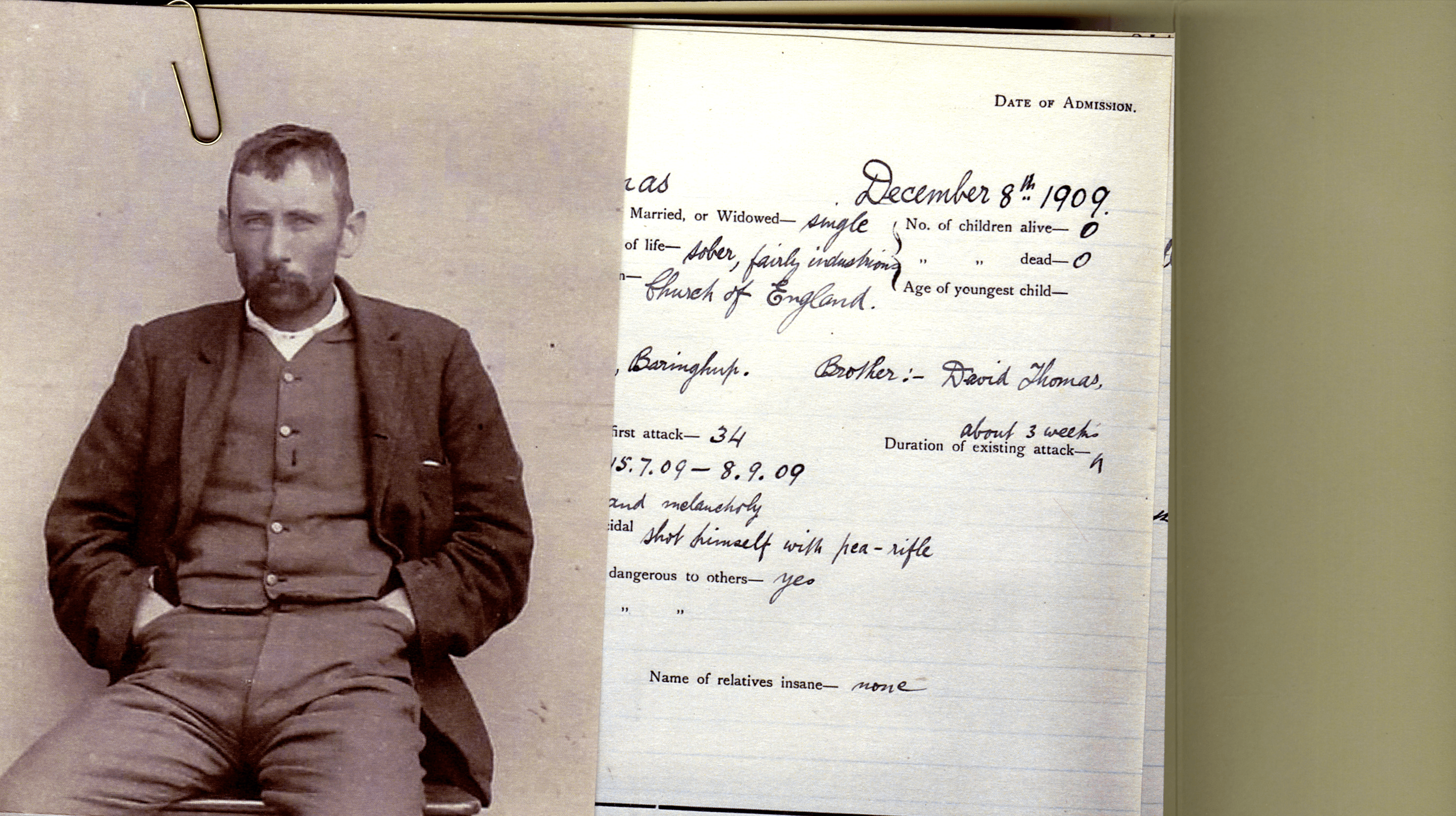

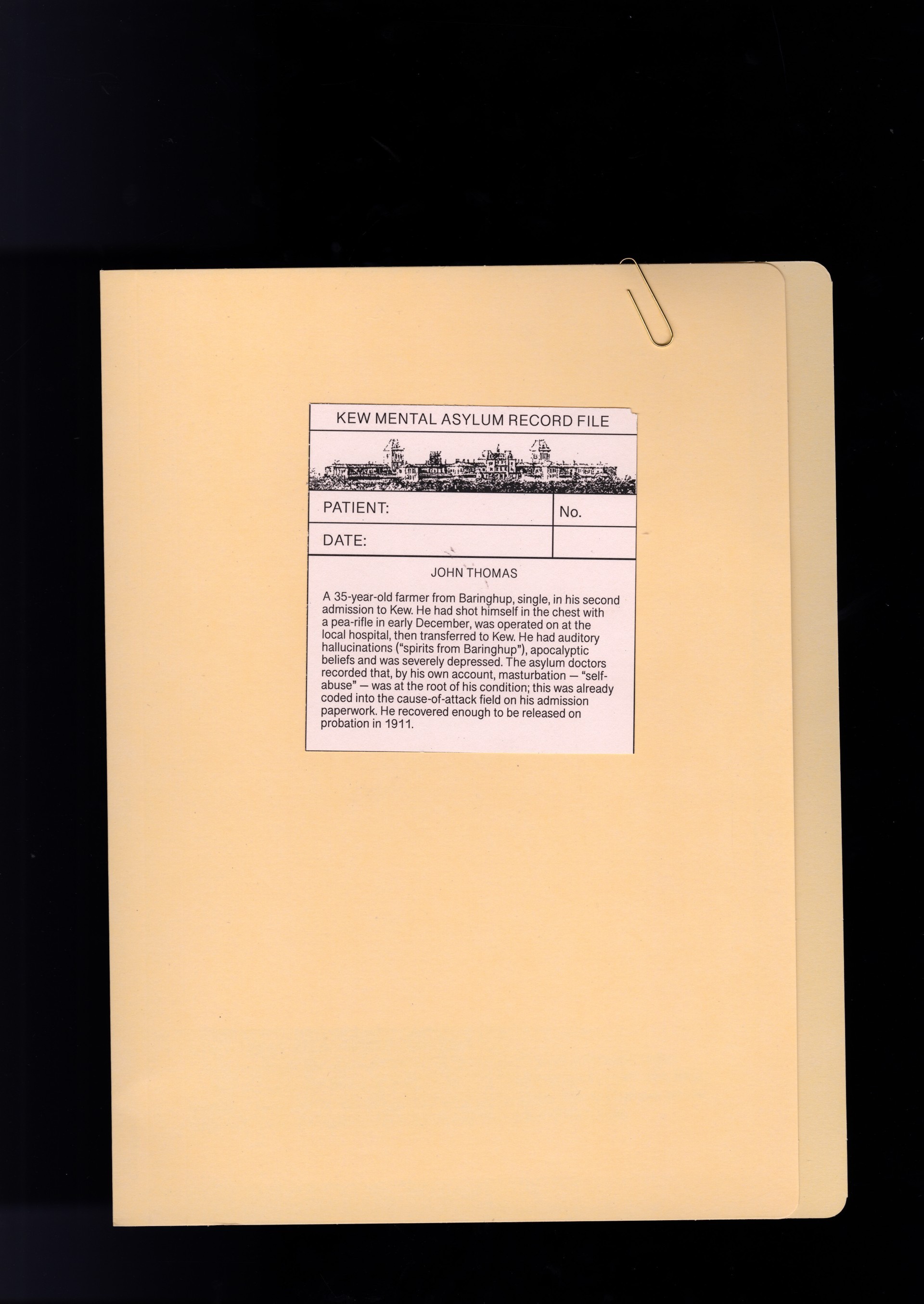

A cabinet full of drawers is also a cabinet full of people. Filed Away transforms an original asylum cabinet into an archival intervention, its repetitive grid preserving the visual logic of a system that reduced lives to classifications.
Each drawer: a diagnosis, a record, an erasure. The cabinet’s structure reflects the way the asylum organised and classified people, reinforcing ideas of control, categorisation, and institutional authority. What got filed away wasn't just records. It was people.
A cabinet full of drawers is also a cabinet full of people. Filed Away transforms an original asylum cabinet into an archival intervention, its repetitive grid preserving the visual logic of a system that reduced lives to classifications.
Each drawer: a diagnosis, a record, an erasure. The cabinet’s structure reflects the way the asylum organised and classified people, reinforcing ideas of control, categorisation, and institutional authority. What got filed away wasn't just records. It was people.